•   QMS ISO9001

First aid

What Happens If Your Business Doesn’t Have First Aid Training? (UK Legal Guide)

What Happens If Your Business Doesn’t Have First Aid Training? (UK Legal Guide)

What Happens If Your Business Doesn’t Have First Aid Training? (UK Legal Guide) 1600 896 SPP Solutions

Most business owners don’t choose to ignore first aid. It usually happens quietly: “We’ll sort it next month,” “We’ve got a kit,” “We’re low risk.”

The problem is that accidents and sudden illness don’t wait until it’s convenient.

This guide looks at what can actually happen if your workplace doesn’t have first aid training in place, and what UK employers are expected to do to stay compliant with health and safety requirements.

1. Does UK law actually require first aid training?

UK law expects employers to have adequate and appropriate first aid provision.

That doesn’t always mean a fixed number of first aiders. It means you need to be able to respond properly if someone is injured or becomes unwell at work.

In simple terms:

  • Help needs to be available quickly
  • People need to know what to do
  • The workplace needs to be set up for what could realistically happen

👉 You can view our First Aid Training courses here: https://sppsolutions.com/first-aid-training-courses/

2. What happens if you don’t have it?

If there’s no real first aid provision (or it’s clearly not enough), the impact tends to show up in a few predictable ways.

You lose time when time matters

When something happens, people look around for direction:

  • Who knows what to do?
  • Where’s the kit?
  • Who’s calling for help?

Without training, even sensible people hesitate, and that’s where situations escalate.

The business becomes harder to defend

If an incident leads to questions later (from an injured person, insurer, or inspector), the conversation is usually simple:

“Did you take reasonable steps to be prepared?”

If the answer isn’t clear, you’re immediately on the back foot.

You risk enforcement and unwanted attention

Most of the time, nobody is trying to catch you out. But if you’re asked about your arrangements and can’t show a clear plan, it can trigger follow-up action and deadlines to put things right.

You take a reputational hit

Even a minor incident can turn into:

  • “They didn’t know what to do”
  • “There wasn’t anyone trained”

That’s not the kind of reputation any business wants.

3. “We’ve got a first aid kit” Is that enough?

A kit helps. But a kit on its own isn’t a plan.

A good setup usually includes:

  • the right kit for your workplace
  • at least one trained person who can use it properly
  • coverage for holidays, sickness, and shifts
  • a simple process everyone understands

If no one knows what’s in the kit or how to use it, it becomes a false sense of security.

See our Emergency First Aid at Work courses here: https://sppsolutions.com/hse-1-day-emergency-first-aid-training/

4. What does “adequate and appropriate” look like in practice?

It depends on your workplace and your risks.

A sensible first aid setup takes into account:

  • How many people do you employ
  • the type of work being carried out
  • the kinds of incidents that could realistically happen
  • lone working or remote staff
  • How quickly emergency services could reach you

There’s no one-size-fits-all answer; it’s about being properly prepared for your environment.

5. The simplest way to get it right

You don’t need to overcomplicate it.

Start with:

  1. A basic first aid needs assessment
  2. The right level of training
  3. A suitable and maintained first aid kit
  4. Clear coverage across your team
  5. A simple annual review

That’s it, practical and compliant.

Final thought

If something happened in your workplace tomorrow:

  • Would people know what to do in the first minute?
  • Would your setup stand up to scrutiny?

If there’s any uncertainty, it’s worth tightening things up now rather than later.

Need help getting this right?

If you’re unsure whether your current setup meets UK requirements, we can help you put a clear, practical first aid plan in place.

View our Workplace First Aid Training options here: https://sppsolutions.com/first-aid-training-courses/

Quick FAQ: Workplace First Aid Training (UK)

Do I legally need first aid training?

You need adequate and appropriate first aid provision. That usually means having trained people available at the right level for your workplace, plus the right kit and a simple plan.

We’re a small business — does this still apply?

Yes. Small doesn’t mean “no responsibility”. It just means your setup should be proportionate to your risks.

Is a first aid kit enough?

A kit helps, but it isn’t a full plan. You also need someone confident to respond, clear access to the kit, and regular checks so it’s complete and in date.

How many first aiders do we need?

There’s no one-size number. Think in terms of reliable cover — shifts, holidays, sickness, multiple sites, and how quickly help could arrive.

Office-based business — do we really need it?

Usually yes. Offices still see falls, fainting, choking, allergic reactions, and medical episodes. The risks are real, even if they’re not “industrial”.

What’s the difference between a First Aider and an Appointed Person?

A First Aider is trained to give first aid. An Appointed Person manages the arrangements (calls for help, looks after the kit, coordinates). What you need depends on your workplace.

Do remote/lone workers count?

Yes — you still need a plan. It can be simple, but it should cover lone working and travel-for-work realities.

How often should training be refreshed?

Refresh before confidence fades. Many businesses refresh every few years, with shorter updates in between—especially when staff or risks change.

What are the most common gaps?

Kits out of date, nobody knows where they are, no holiday cover, and training that doesn’t match the real risks.


Mental Health First Aid Training: What Employers Need to Know (UK 2026)

Mental Health First Aid Training: What Employers Need to Know (UK 2026)

Mental Health First Aid Training: What Employers Need to Know (UK 2026) 1600 896 SPP Solutions

Mental health is now a central part of workplace wellbeing. With increasing awareness across the UK, many employers are considering Mental Health First Aid training as part of their wider health and safety strategy.

But what does a Mental Health First Aid course actually involve? Is it a legal requirement? And how should employers implement it responsibly?

This guide explains everything UK employers need to know.

What Is Mental Health First Aid Training?

Mental Health First Aid (MHFA) is a structured training programme that equips participants to:

  • Recognise signs of mental ill health
  • Provide initial, non-judgemental support
  • Listen empathetically
  • Signpost to professional services

A certified Mental Health First Aid training course does not provide therapy, diagnosis, or counselling. Instead, it acts as an early intervention and support mechanism.

SPP Solutions delivers accredited mental health training courses in the UK, designed to support employers in building safer, more supportive workplaces.

Is Mental Health First Aid a Legal Requirement?

Unlike physical first aid at work, Mental Health First Aid is not currently mandatory under UK law.

The Health and Safety Executive (HSE) requires provision for physical first aid but does not mandate MHFA.

However, under the Health and Safety at Work etc. Under the 1974 Act, employers have a duty to protect employee health, including mental health. Including psychosocial risks in workplace risk assessments is increasingly considered best practice.

Implementing Mental Health First Aid training in the UK can demonstrate reasonable steps toward fulfilling this duty.

Why Employers Are Investing in Mental Health First Aid

While not legally required, many organisations introduce MHFA as part of a broader wellbeing strategy.

Potential benefits include:

  • Early recognition of mental health concerns
  • Reduced stigma
  • Improved internal support pathways
  • Stronger duty-of-care positioning

It is important to maintain realistic expectations. Evidence shows MHFA improves awareness and confidence, but it is not a cure for mental health conditions or a replacement for professional support.

How to Implement Mental Health First Aid Responsibly

If introducing a Mental Health First Aid course, employers should:

1. Include mental health within workplace risk assessments

2. Use accredited training providers

3. Establish clear referral pathways (EAPs, GPs, counselling services)

4. Integrate MHFA into a wider wellbeing strategy

5. Monitor outcomes sensitively and anonymously

MHFA works best as part of a comprehensive approach, not as a standalone solution.

Mental Health First Aid vs Physical First Aid

Physical first aid training directly treats injuries. Mental Health First Aid focuses on:

  • Listening
  • Reassurance
  • Signposting

Both are important elements of a modern workplace safety strategy.

Conclusion

Mental Health First Aid training in the UK is not legally mandatory, but it reflects a growing recognition that employee wellbeing includes psychological health as well as physical safety.

When combined with strong referral pathways and leadership commitment, Mental Health First Aid courses can support a healthier workplace culture.

SPP Solutions provides accredited Mental Health First Aid training and wider workplace health and safety consultancy to help organisations build balanced, compliant, and evidence-informed wellbeing strategies.

The Hidden Pitfalls of CCTV

The Hidden Pitfalls of CCTV: UK Compliance and Legal Risks Explained

The Hidden Pitfalls of CCTV: UK Compliance and Legal Risks Explained 1600 896 SPP Solutions

Modern CCTV systems are more advanced than ever. High-definition cameras, AI-powered analytics, facial recognition, and number plate recognition now play a central role in security, policing, and care environments across the UK.

But while organisations often focus on image quality and technological capability, there is a less visible factor that ultimately determines whether CCTV footage is usable at all: legal compliance.

In practice, even crystal-clear footage can be rendered useless if it is collected, managed, or retained in a way that breaches UK data protection or surveillance law. This article explains why compliance, not hardware, is the true foundation of an effective CCTV system.

The Rise of Advanced Surveillance Technology

CCTV has evolved far beyond passive recording. Many systems now support:

  •  Live facial recognition (LFR)
  • Automatic number plate recognition (ANPR)
  • AI-driven behaviour analysis
  • Integrated city-wide or site-wide monitoring networks

These technologies can improve safety, deter crime, and support investigations. However, the more intrusive the system, the higher the legal threshold for justification, documentation, and oversight.

This is where many organisations encounter problems, not because the technology fails, but because the process behind its use is flawed.

Why CCTV Evidence Can Be Rejected

In legal proceedings, the question is not just what the camera captured, but how that footage was obtained.

Common challenges raised include:

  • Was the surveillance lawful?
  • Was it proportionate to the risk?
  • Were privacy rights properly considered?
  • Was the data handled and retained correctly?

If these questions cannot be answered clearly, CCTV evidence may be challenged under legislation such as:

  • The Data Protection Act 2018
  • The UK GDPR
  • The Police and Criminal Evidence Act (PACE)
  • Human rights law relating to privacy and fairness

In some cases, this can result in footage being ruled inadmissible, regardless of how compelling it appears.

The Role of the Data Protection Impact Assessment (DPIA)

At the centre of CCTV compliance is the Data Protection Impact Assessment (DPIA).

A DPIA is not a formality. It is a documented assessment that demonstrates:

  • Why surveillance is necessary
  • How risks to individuals are mitigated
  • That monitoring is proportionate to the purpose
  • That less intrusive alternatives have been considered

For CCTV systems operating in public or semi-public spaces, including care homes, workplaces, and public buildings, a DPIA is often mandatory.

Where DPIAs Commonly Fall Short

In practice, DPIAs may fail because they:

  • Underestimate privacy and bias risks
  • Ignore environmental factors affecting reliability
  • Overlook data retention and access controls
  • Are created once and never reviewed

Courts and regulators have shown that weak or outdated DPIAs can invalidate entire surveillance operations.

Legal and Regulatory Consequences of Poor Compliance

Failure to meet CCTV compliance standards can lead to:

  • Evidence being excluded from legal proceedings
  • Enforcement action by the Information Commissioner’s Office (ICO)
  • Financial penalties under the data protection law
  • Loss of public trust and reputational damage

As CCTV use expands across sectors from policing to care and commercial security, scrutiny is increasing. Organisations are expected to demonstrate not just capability, but governance and accountability.

Common CCTV Compliance Mistakes

Even experienced operators can fall into these traps:

Focusing on Technology Over Process

High-spec cameras do not compensate for poor legal foundations.

Outdated or Generic DPIAs

A one-size-fits-all assessment does not reflect real-world risks.

Poor Documentation

Lack of clear records around purpose, access, and retention weakens legal standing.

Ignoring Ongoing Review

Surveillance systems should be reassessed as environments, risks, and technologies change.

Why Compliance Is the Real Priority

CCTV is not just about observation; it is about demonstrating lawful and responsible operation.

Organisations that treat compliance as a living process, rather than a tick-box exercise, are far more likely to:

  • Protect individuals’ rights
  • Maintain admissible evidence
  • Avoid regulatory issues
  • Build long-term trust

Ultimately, the effectiveness of CCTV is determined not by how clearly it sees, but by how defensibly it is used.

Final Thoughts

Clear footage alone is not enough. Without proper legal foundations, even the most advanced CCTV systems can fail at the moment they matter most.

By prioritising compliance, regularly reviewing DPIAs, and embedding governance into everyday operations, organisations can ensure their surveillance systems are not only effective but also lawful, ethical, and defensible.

First Aid at Work vs Emergency First Aid at Work

First Aid at Work vs Emergency First Aid at Work: Which Course Do You Actually Need?

First Aid at Work vs Emergency First Aid at Work: Which Course Do You Actually Need? 1600 896 SPP Solutions

As a UK-based employer or business owner, ensuring the safety and well-being of your team is not just a moral obligation—it’s a legal one. The Health and Safety (First Aid) Regulations 1981 require you to provide adequate and appropriate first aid equipment, facilities, and personnel in your workplace. But with various training options available, it can be tricky to know which one fits your needs. Two of the most common courses are First Aid at Work (FAW) and Emergency First Aid at Work (EFAW). The key to choosing the right one? It all comes down to a thorough risk assessment of your workplace, focusing on the types and severity of potential accidents or illnesses.

In this post, we’ll break down the differences between FAW and EFAW, explain what each covers, and guide you on how to decide which is essential for your organisation. Remember, getting this right isn’t about ticking boxes—it’s about being prepared for real-world scenarios that could save lives.

Understanding the Health and Safety (First Aid) Regulations 1981

Before diving into the courses, let’s quickly recap the regulations. Enforced by the Health and Safety Executive (HSE), these rules mandate that employers assess their first aid needs based on factors like workplace hazards, the number of employees, and the nature of the work. There’s no one-size-fits-all approach; low-risk environments (like offices) might need less comprehensive training, while high-risk ones (such as construction sites or factories) demand more advanced skills. Failing to comply could lead to fines or legal issues, and, more importantly, put your team at risk.

Your first step should always be a first aid needs assessment. This evaluates potential incidents—from minor cuts to severe injuries—and determines the required training level. The HSE provides free tools and guidance to help with this process.

What is Emergency First Aid at Work (EFAW)?

EFAW is the entry-level qualification for first aiders in lower-risk workplaces. It’s designed to equip participants with the basics to handle immediate, life-threatening emergencies until professional help arrives.

Duration: Typically, a one-day course (around 6 hours of training).

Content: Focuses on core skills like CPR, dealing with unconscious casualties, controlling bleeding, shock management, and basic wound care. It also covers how to assess incidents and call for emergency services.

Qualification Level: Level 3 award.

Validity: Certificates are valid for three years; the course is retaken after that.

This course is ideal if your risk assessment shows mainly minor hazards, such as in small offices, shops, or low-hazard environments where severe accidents are unlikely. It’s a cost-effective way to meet minimum legal requirements without overcommitting resources.

What is First Aid at Work (FAW)?

FAW builds on EFAW and goes much deeper, preparing first aiders to respond to a broader range of injuries and illnesses. It’s the go-to for workplaces where risks are higher or more varied.

Duration: A three-day course (18 hours of training).

Content: Includes everything in EFAW, plus advanced topics like treating fractures, burns, eye injuries, poisoning, anaphylaxis, heart conditions, strokes, and asthma attacks. It also emphasises longer-term casualty management and record-keeping.

Qualification Level: Level 3 award.

Validity: Also, three years, with annual refreshers recommended for best practice.

FAW is essential in settings such as manufacturing, construction, hospitality, and any workplace with machinery, chemicals, or a larger workforce, where accidents can be more severe.

These differences highlight why FAW is more thorough—it’s not just longer; it’s equipped for the “what if” scenarios that could escalate in riskier environments.

Which Course Do You Actually Need?

It Depends on Your Workplace Risks

The deciding factor isn’t the course name—it’s your specific workplace. Under the 1981 regulations, you must base your choice on a risk assessment that considers:

Types of Hazards:

Are there risks of severe injuries (e.g., from heavy machinery) or just minor ones (e.g., slips in an office)? If severe, opt for FAW.

Severity of Potential Accidents:

Low-risk? EFAW might suffice.

High-risk or remote locations? FAW is better for handling prolonged care.

Workforce Size and Setup:

For 1-50 employees in low-risk settings, one EFAW-trained first aider may be enough. Larger or higher-risk sites need more FAW-qualified personnel.

Other factors

include shift patterns, lone workers, public access, and a history of incidents.

The HSE advises that while EFAW meets basic needs, FAW ensures compliance in complex scenarios. If in doubt, err on the side of more training—it’s an investment in safety.

Final Thoughts:

Prioritise Safety with the Right Training

Choosing between FAW and EFAW boils down to understanding your workplace’s unique risks. A proper needs assessment will point you in the right direction, ensuring you’re compliant and prepared. If you’re unsure, consulting a professional training provider can help tailor the best solution.

At SPP Solutions, we specialise in UK-compliant first aid training and consultancy. Whether it’s conducting a risk assessment or delivering EFAW/FAW courses, we’re here to support your business. Contact us today to discuss how we can enhance your workplace safety.

Non-compressible bleeding control

Non-Compressible Bleeding Control: What Emerging Trauma Research Means for First Aid and Emergency Response

Non-Compressible Bleeding Control: What Emerging Trauma Research Means for First Aid and Emergency Response 1600 896 SPP Solutions

Why Non-Compressible Bleeding Is Still a Major Challenge in Trauma Care

Uncontrolled bleeding remains one of the leading causes of preventable death in both civilian incidents and workplace emergencies. While most first aid training focuses on controlling external, compressible bleeding, serious trauma involving the chest, abdomen, or head presents a far greater challenge, and one that current first aid protocols can only partially address.

For health and safety professionals, first aiders, and organisations responsible for emergency preparedness, understanding how trauma care is evolving is essential. Not because experimental technologies are available today, but because emerging research highlights the limitations of existing bleeding control methods and reinforces the importance of early intervention, correct training, and rapid escalation to emergency services.

Recent preclinical research from the Korea Advanced Institute of Science and Technology (KAIST) has explored a novel sprayable haemostatic powder known as AGCL. Designed to address non-compressible haemorrhage, this research offers insight into the future direction of trauma care and why effective first aid training and emergency planning remain critical today.

Current Bleeding Control Methods and Their Limitations

Uncontrolled haemorrhage is a leading cause of death in trauma, including road traffic accidents, industrial incidents, violent assaults, and mass-casualty events. While direct

pressure and tourniquets are effective for many external wounds, they are not suitable for non-compressible bleeding, such as injuries to the torso or head.

Traditional haemostatic agents, including impregnated gauze and powder-based products, are widely used in trauma care but have significant limitations. Many are not recommended for:

  • Abdominal wounds involving internal organs
  • Chest or thoracic injuries affecting the lungs or heart
  • Head injuries with complex or irregular wound sites

In these cases, first aiders are often limited to basic life-saving actions while awaiting emergency medical support, highlighting a clear gap in current bleeding control options.

Emerging Trauma Research: New Approaches to Bleeding Control

AGCL Haemostatic Powder: A Potential Future Solution

Researchers at KAIST have developed AGCL, a sprayable haemostatic powder designed to rapidly form a hydrogel barrier on contact with blood. According to preclinical animal studies published in Advanced Functional Materials in late 2025, the material demonstrated rapid clot formation and improved bleeding control in complex wound models.

Key findings from the research suggest that AGCL:

  • Forms a sealing barrier in approximately one second
  • Can flow into deep or irregular wound cavities
  • Withstood high-pressure bleeding in animal models
  • Showed favourable biocompatibility and positive healing indicators

These results are based solely on preclinical research. AGCL has not yet undergone human clinical trials and has not received regulatory approval for use in real-world first aid, workplace, or medical settings.

What This Means for First Aid and Workplace Emergency Response

While innovations like AGCL are promising, they are not part of current first aid practice and should not be viewed as a replacement for established emergency response procedures. However, this research reinforces several important points for organisations and first aiders:

  • Non-compressible bleeding remains extremely difficult to manage
  • Early recognition of serious trauma is critical
  • Rapid escalation to emergency medical services saves lives
  • Prevention and risk assessment reduce exposure to severe injuries

For workplaces, this underlines the importance of appropriate first aid provision, trained first aiders, and clear emergency response plans that reflect the specific risks present within the organisation.

Preparing for Trauma Incidents: What Organisations Should Focus on Now

Emerging trauma research, such as AGCL, provides a glimpse into how bleeding control may evolve in the future, particularly for injuries that current methods struggle to manage. However, these technologies remain experimental and are not approved for real-world use in first aid or workplace environments.

What this research clearly demonstrates is that there are no shortcuts when it comes to emergency preparedness. Effective first aid training, robust health and safety management systems, thorough risk assessments, and fast access to emergency medical services remain the most reliable ways to protect lives.

At SPP Solutions, we monitor developments in health and safety, first aid, and emergency response to help organisations understand both current best practice and emerging trends, while ensuring compliance with today’s legal and safety requirements. Until future innovations move from the laboratory to regulated clinical use, prevention, preparedness, and high-quality training remain the strongest tools available.

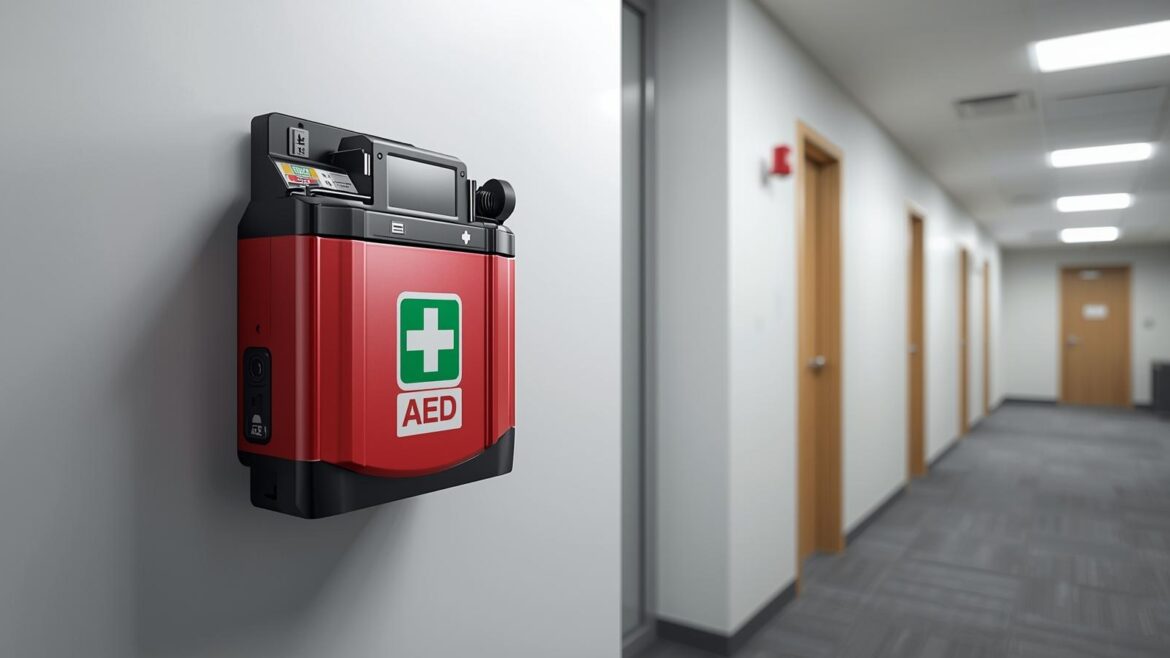
AEDs in the workplace

AEDs in the Workplace

AEDs in the Workplace 1600 896 SPP Solutions

Do employers need an AED, and who is allowed to use one?

In the UK, employers are not legally required to install an Automated External Defibrillator (AED). However, where an AED is provided following a first aid needs assessment, it becomes workplace equipment, and employers have legal responsibilities around its management and use.

Anyone can use an AED in an emergency, and UK law strongly supports life-saving action taken in good faith. This guide explains what UK law, the HSE, and the Resuscitation Council UK actually say — in practical, real-world terms.

1. What UK Common Law Says About Helping in an Emergency

Under English and Welsh Common Law, members of the public are not legally required to intervene in an emergency unless they have created the danger or have a contractual or statutory duty to act.

That said, courts consistently look favourably on people who attempt to help. The Social Action, Responsibility and Heroism (SARAH) Act 2015 reinforces this by requiring courts to consider whether someone was acting responsibly and for the benefit of others.

In major incidents, early aid is often delivered by lay people or off-duty professionals while emergency services wait until a scene is safe. The legal system recognises and supports this reality.

2. Consent in First Aid: When It’s Required (and When It Isn’t)

Consent is a fundamental principle of first aid in the UK.

Informed Consent

If the casualty is conscious, a first aider should explain what they intend to do and obtain permission before providing care.

Implied Consent

If the casualty is unconscious or unable to communicate, the law assumes they would consent to life-saving treatment. This allows immediate intervention and protects the first aider.

3. What the Health and Safety (First Aid) Regulations 1981 Say About AEDs

The Health and Safety (First Aid) Regulations 1981 do not make AEDs mandatory in the workplace. However, where an employer decides, through a first aid needs assessment, to provide an AED, it becomes workplace equipment and therefore falls under health and safety law.

In practical terms, this means employers are expected to ensure that employees are trained to use any equipment they provide, including AEDs, as part of their wider first aid training and emergency preparedness. This is the position reflected in HSE guidance, which then signposts employers to the Resuscitation Council UK as the subject matter expert.

The Resuscitation Council UK advises that while training is strongly recommended, it is not legally mandatory to use an AED. AEDs are specifically designed to be used safely by anyone in an emergency, with clear voice prompts and automated decision-making.

These two positions complement each other:

  • Employers should ensure trained first aiders are available in the workplace.
  • As part of Emergency First Aid at Work (EFAW) and First Aid at Work (FAW) courses, first aiders are trained and familiarised with AED use.
  • If trained staff are unavailable during an emergency, any person can pick up and use an AED without fear of legal consequences.

This approach satisfies health and safety expectations while ensuring that life-saving action is never delayed.

4. Resuscitation Council UK: Legal Risk and AED Use

The Resuscitation Council UK confirms that it is extremely unlikely anyone would be sued for using an AED in good faith. There has never been a successful UK case against someone who attempted to provide first aid.

AEDs are intended for public use, and national guidance actively encourages bystanders to use them when needed.

Could a business be sued for not having an AED?

There is no UK law requiring businesses to install AEDs. While employers must take reasonable safety precautions, there are no known UK cases where a business has been found liable for not providing one.

Could someone be sued for not using an AED?

Only individuals with a defined duty of care, such as designated workplace first aiders, would be expected to act within their training and available equipment.

5. FAQ About AEDs in the Workplace

Do employers legally need a defibrillator?
No. No UK law requires employers to install an AED. However, employers must carry out a first aid needs assessment, and where an AED is provided, it must be managed as workplace equipment under health and safety law.

Do staff need training to use an AED?
AEDs are designed to be used safely by anyone, with clear voice prompts and automated decision-making. While training is strongly recommended, lack of training should never prevent someone from using an AED in an emergency.

Can someone be sued for using an AED?
It is extremely unlikely. UK law and national guidance support people who act in good faith to save a life. There has never been a successful UK case against someone for using an AED in an emergency.

6. AED Training: Who Can Use One?

Anyone can use an AED.

AEDs provide:

  • clear voice instructions
  • automatic heart rhythm analysis
  • guidance on when a shock is required

Training builds confidence and preparedness, but lack of training should never prevent AED use in an emergency.

7. PUWER 1998: Employer Responsibilities When Providing an AED

Where an AED is provided, the Provision and Use of Work Equipment Regulations (PUWER) 1998 apply. Employers must ensure that the AED:

  • is suitable for its environment
  • is safe and maintained
  • is used appropriately
  • follows manufacturer instructions

Modern AEDs perform daily self-checks and alert users to faults, making compliance straightforward.

Conclusion: What This Means for UK Employers

AEDs are legally supported, ethically encouraged, and strongly recommended by UK medical authorities. While not mandatory, they significantly improve survival outcomes during cardiac arrest and demonstrate strong workplace safety leadership.

For employers, best practice is clear:

  • Carry out a first aid needs assessment
  • Ensure trained first aiders are available
  • Provide suitable equipment where appropriate
  • Allow anyone to act if trained staff are unavailable

AEDs save lives — and UK law supports those who use them responsibly.

first aid refresher training

First Aid Refresher Training – How Often Is It Required?

First Aid Refresher Training – How Often Is It Required? 1600 896 SPP Solutions

How Often Should First Aid Training Be Refreshed in the UK?

Keeping first aid skills up to date can save lives, but training certificates don’t last forever. In the UK, most workplace first aid qualifications are valid for three years, and the HSE strongly recommends annual refresher training to keep skills current.

So, how often should first aid training be refreshed? This guide explains certificate validity, HSE guidance, and best practice for UK employers

When Does the HSE Consider a First Aid Certificate Expired?

A common question employers ask is: If you train a staff member to be a first aider, after how long does the HSE regard their certificate as expired?

Under current HSE guidance, most workplace first aid certificates remain valid for three years. After this period, the certificate is regarded as expired unless the individual completes a full requalification course. Although annual refresher training is not legally mandatory, the HSE strongly recommends it to maintain competence and confidence.

HSE Guidelines on First Aid Refresher Training

The Health and Safety (First-Aid) Regulations 1981 require employers to provide adequate and appropriate first aid. These workplace first aid requirements are based on risk, workforce size, and the nature of the work being carried out, but they do not set fixed retraining intervals.

HSE guidance explains that:

  • First aid certificates are generally valid for 3 years.

  • Once a certificate expires, a full requalification course is required to remain a qualified workplace first aider.

  • During the 3-year validity period, the HSE strongly recommends regular refresher training to keep skills up to date.

Official HSE guidance (GEIS3 and L74) encourages employers to arrange annual refresher training, particularly in the final year of the certificate’s validity. For employers assessing their obligations, our first aid training courses provide a clear route to meeting these requirements. Different Training Levels & Renewal Cycles

There are three central workplace first-aid qualifications in the UK:

  • Emergency First Aid at Work (EFAW) – 1-day course

– Certificate valid: 3 years

– To renew: Retake the full 1-day EFAW course (or the 2-day requalifier if you also want FAW level)

– Annual refresher strongly recommended (3-hour course available)

  • First Aid at Work (FAW) – 3-day initial course

– Certificate valid: 3 years

– Renewal options (if certificate still in date):  2-day First Aid at Work Requalification Course

– If the certificate has expired (even by one day): Must complete the full 3-day FAW course again

– Annual 3-hour First Aid refresher training strongly recommended

  • First Aid at Work Requalification – 2-day course (only valid if taken before expiry)

– Extends qualification for another 3 years

Paediatric and specialist courses (e.g., forestry, schools, sports) follow similar 3-year cycles unless the awarding body states otherwise.

Recommended Best Practice

While the legal minimum is a 3-year requalification, most health and safety experts and training bodies recommend far more frequent refreshers:

– Annual 3-hour refresher (HSE’s own recommendation) – covers life-saving skills (CPR, AED, choking, severe bleeding, unconscious casualty)

– Many large organisations and high-risk workplaces (construction, manufacturing, care homes) now mandate annual First Aid refresher training as part of their policy

Real-world tip: Confidence and competence drop significantly after about 6–12 months if skills aren’t used. Someone who did their FAW course 2.5 years ago may still hold a valid certificate, but struggles to perform effective CPR in a real emergency.

Quick Summary: How Often Should You Refresh First Aid Training?

QualificationLegal Certificate ValidityHSE-Recommended RefresherBest Practice (High-Risk / Large Employers)
Emergency First Aid at Work (EFAW)3 yearsAnnual 3-hour refresherAnnual refresher + full requalification every 3 years
First Aid at Work (FAW)3 yearsAnnual 3-hour refresherAnnual refresher + 2-day requalification before expiry

The Role and Legal Considerations of Automated External Defibrillators in the Workplace

The Role and Legal Considerations of Automated External Defibrillators in the Workplace 150 150 SPP Solutions

Automated external defibrillators (AEDs) have increasingly become a critical component of workplace and public space safety, particularly in environments where cardiac emergencies are possible. The Provision and Use of Work Equipment Regulations 1998 (PUWER) establishes essential guidelines for employers wishing to introduce AEDs into the workplace and the legal implications surrounding their use. This essay will explore the regulations surrounding AEDs, the legal responsibilities of employers and employees, and the protection afforded to individuals who intervene during emergencies, illustrating the importance of AEDs in saving lives and the framework of support surrounding their use in the workplace and beyond.

Regulatory Framework for AEDs in the Workplace

The PUWER 1998 regulations lay the groundwork for ensuring that all work equipment, including AEDs, is constructed and maintained appropriately for its intended use. According to Regulation 2, employers are responsible for ensuring that the work equipment provided is suitable for its purpose and adapted to the specific working conditions present in their workplace. This includes procuring AEDs and enabling a proper understanding of how to use them effectively when needed.

Specifically, if an employer determines through a thorough needs assessment that an AED is necessary for the workplace, they must comply with PUWER’s stipulations. This involves providing written instructions from the manufacturer on the AED’s operation and ensuring that employees possess the training required to utilise the device confidently. While basic instructional materials contribute to awareness, comprehensive training, incorporated into First Aid at Work (FAW) and Emergency First Aid at Work (EFAW) courses, equips employees with the practical skills and knowledge necessary to respond effectively, instilling confidence in their capabilities during emergencies. Further Information for Employers can be sought within the Health and Safety (First Aid) Regulations 1981 Para 44.

Legal Obligations and Responsibilities

In England and Wales, common law asserts that individuals typically bear no criminal liability for failing to assist another in danger unless specific conditions—such as an assumption of responsibility, a dangerous situation created by the bystander, or an existing contractual or statutory obligation—are met. These legal foundations illustrate the fundamental premise that the law encourages individuals to assist those in need but does not impose an undue burden of responsibility on bystanders.

Nonetheless, potential users of AEDs might be apprehensive about the legal repercussions of their actions in an emergency. The Resuscitation Council UK clarifies this matter, emphasising that individuals acting within their capabilities will likely avoid facing legal action when using an AED to aid a person in distress. Notably, since the enactment of the Social Action, Responsibility and Heroism Act 2015, which aims to protect “good Samaritans,” the threshold for successful claims of negligence against individuals who attempt to assist others has been heightened. Despite the Act’s brevity and perceived vagueness, its intended protective impact resonates deeply within the community of potential rescuers. Courts in the UK have historically favoured those who endeavour to aid others, thus decreasing the anxiety surrounding using AEDs by untrained bystanders.

The Role of Insurance Companies

Insurance companies play a significant role in shaping the environment surrounding AED use in workplaces. Often, they impose restrictions that can discourage individuals from intervening in emergencies. For instance, some insurance policies may state that only trained employees can use AEDs, creating a false narrative that bystanders should only act if they have received formal training. This stance is inaccurate and dangerous, as it can delay potentially life-saving treatment during critical moments.

AEDs are designed to be user-friendly, with clear instructions that guide users through delivering a shock if necessary. By perpetuating the idea that only specific individuals can use these devices, insurance companies may inadvertently contribute to a culture of inaction, whereby bystanders hesitate to help due to fear of repercussions or misunderstanding of their legal rights. Organisations must challenge these misconceptions and promote a culture where all employees feel empowered to act in emergencies, regardless of their formal training status.

Promoting AED Use

Given the increasing prevalence of cardiac arrests and the critical role AEDs play in survival during such events, organisations and employers are encouraged to promote AED training and awareness among their employees. A well-established culture of preparedness can significantly enhance workplace safety and contribute to better health outcomes in emergencies. Training sessions should focus on the mechanics of using an AED and cardiopulmonary resuscitation (CPR) techniques, recognising signs of cardiac distress, and fostering an environment of teamwork and support in emergencies.

Moreover, the provision of AEDs should be accompanied by regular maintenance and accessibility measures to ensure they are always in working order and available for use when necessary. Employers must be proactive, integrating AED management into their health and safety protocols, conducting routine checks, and ensuring that employees are regularly updated on the location and use of the device. As mentioned in previous blog posts, very little maintenance is needed to ensure AEDs are fit for purpose.

Conclusion

The deployment of AEDs within the workplace is not a regulatory requirement but a vital element of a comprehensive emergency response strategy. By adhering to the provisions outlined in PUWER 1998 and the H&S (FA) Regs 1981 fostering an empowered workforce through practical training, employers can significantly mitigate the risks associated with cardiac emergencies. The legal landscape, characterised by protections for would-be rescuers and a supportive framework for AED use, encourages individuals to step in during crises, ultimately enhancing community resilience.

As our understanding of workplace health and safety evolves, so must our commitment to integrating life-saving technologies like AEDs into everyday practices. By prioritising the installation, training, and legal safeguards surrounding AEDs, employers create a safer workplace where the potential for saving lives becomes an ingrained aspect of their organisational culture. The combination of adequate regulatory frameworks, appropriate training, and legal protections cultivates an environment where individuals are empowered to act during emergencies, underscoring the profound impact of being prepared in moments of critical need.

CHRISTIAN ERIKSEN’S EURO 2020 CARDIAC ARREST: 5 LESSONS LEARNT

CHRISTIAN ERIKSEN’S EURO 2020 CARDIAC ARREST: 5 LESSONS LEARNT 150 150 SPP Solutions

Denmark’s players prepare for their second game of the 2020 European Championship today as they take on World number-one ranked Belgium, in what would typically be their toughest challenge of a tournament. However, it’s dwarfed in importance by the events of last Saturday. The World was shocked last Saturday when Dane talisman CHRISTIAN ERIKSEN’S EURO 2020 CARDIAC ARREST after suffering a cardiac arrest. Eriksen was ‘gone’, according to team doctor Morten Boesen, prior to the medical staff’s cardiac resuscitation.

Whilst it was ultimately positive news for Eriksen, The British Heart Foundation estimates that 10,000 people needlessly die in the UK, due to our bystander CPR rate being as low as 39% in some areas, compared to 73% in Norway.

So what lessons can we take away from the event?


The early moments are hugely important

No one wants to be in a situation where they are forced to act in place of medical professionals. However, the impact of bystander CPR is critical (which is why proper first aid training is essential). In fact, NEJM claims that the 30-day survival rate for patients who receive CPR before the arrival of emergency medical services was ‘more than double’ that of patients who did not.

Fortunately for Erikson, his captain Simon Kjaer secured the former’s neck, cleared his airways and started CPR. To make his actions even more heroic, he then encouraged the players to form a protective shield around Erikson to provide privacy from cameras, even consoling Erikson’s visibly upset wife once the medics were present.

Doctors the world over have claimed that Kjaer ‘saved his friend’s life’, and it shows us how important it is to act swiftly.


Learn how to administer CPR

This may seem obvious, but people fall victim to many different reasons in not learning emergency first-aid. Whilst many people simply don’t get around to learning it, others may hold the belief that it’s too expensive to learn, or too stressful as they would then consider themselves responsible at the scenes of potential incidents.

In fact, a British Red Cross poll of more than 2,000 adults across the UK found that nearly two-thirds of respondents thought people avoid learning first aid because of the responsibility it carries.

However, whilst learning first-aid is an undertaking that should be taken seriously, it can also be interesting and highly rewarding.

You can see our range of First-Aid Courses here.


Try to locate an AED

Defibrillators can often be the difference in someone surviving a cardiac arrest.
There are many fixed AED points in public places and office blocks so it’s always worth being aware of your nearest one, especially if you are a regular visitor to a location, such as an office. However, modern AED’s are also extremely portable, so if you find yourself in a situation whereby you need an AED, always ask any bystander if they can help locate one, whilst you continue with CPR.


Encourage others to do the same. 

While it is one thing to learn emergency CPR for yourself, there is also huge value in encouraging those around you to do the same.
If you manage a team or know people who require a little bit of encouragement to take new skills on, then you can make a real difference in leading by example.


Being fit doesn’t always prevent serious incidents.

Christian Eriksen is 29-years-old and has played 226 games in the Premier League – known to be the most physically demanding of all the elite football leagues. His cardiologist at Tottenham has said since the incident that Erikson’s heart health was ‘completely norma’, a message echoed by his current club doctor at Inter Milan, Piero Volpi.

So while it’s clear that we should all adopt healthy lifestyle choices, it’s worth keeping in mind that everyone can be affected by emergency situations.


Closing thoughts

Learning how to respond to a first aid emergency is one of the most worthwhile uses of your time and resources. Fortunately, the fast response of the referee – the game was stopped and medics signalled within 5 seconds of Eriksen collapsing – and the players and medical staff ensured this incident did not end in tragedy like CHRISTIAN ERIKSEN’S EURO 2020 CARDIAC ARREST.

It may be worth reflecting on how you and your team can be ready to deal with a similar situation.

You can view our range of First-Aid courses here.


HOW OFTEN IS FIRST AID REFRESHER TRAINING REQUIRED?

HOW OFTEN IS FIRST AID REFRESHER TRAINING REQUIRED? 150 150 SPP Solutions

We’re often reminded of the importance of learning First Aid Training but HOW OFTEN IS FIRST AID REFRESHER TRAINING REQUIRED? What’s often overlooked is the ongoing training required to ensure first aiders retain the basic skills, as well as remaining informed of any changes to first-aid procedures.

Health and Safety Executive (HSE) ‘strongly recommends’ that first aiders undertake annual first aid refresher training, over half a day, during any three-year certification period. This isn’t mandatory.

There is, however, a three-year expiry date on first aid at work training courses or an emergency first aid at work training course, from the date of issue.

Three day first aid at work certificates can be renewed by taking a two-day refresher course, provided this is undertaken within 28 days of the certificate expiry date.

As mentioned in our previous article, there is no fixed number of first aiders in all workplaces; that depends on the results of your first aid needs assessment. However, HSE will not recognise a first-aider in a workplace if they have not refreshed their training for over three years.

You can view our range of First Aid Training courses helping (HOW OFTEN IS FIRST AID REFRESHER TRAINING REQUIRED?) here. You can also visit our Homepage for more information.